Cognitive Behavioral Therapy (CBT)
If you are interested in counseling using CBT, call OakHeart at 630-570-0050 or 779-201-6440 or email us at [email protected]. We have counselors, psychologists, and social workers available to help you at one of our locations in North Aurora, IL, Sycamore, IL, and/or via Telehealth Online Therapy Services serving Kane County, DeKalb County, Dupage County, and beyond.
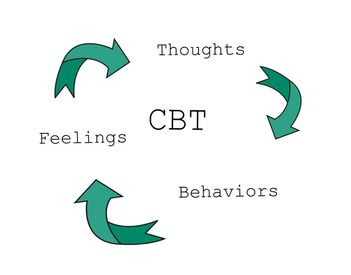
What is Cognitive Behavioral Therapy?Cognitive Behavioral Therapy, commonly known as CBT, is one of the most extensively researched and widely practiced forms of psychotherapy in the world. It is an evidence-based treatment approach grounded in the principle that our thoughts, emotions, physical sensations, and behaviors are all interconnected, and that by identifying and changing unhelpful patterns in any one of these areas, we can produce meaningful improvements across all of them.
CBT was originally developed in the 1960s by Dr. Aaron Beck, a psychiatrist at the University of Pennsylvania, who observed that his patients' emotional difficulties were often maintained by automatic, distorted ways of thinking. His work laid the foundation for what has become one of the most rigorously studied therapeutic approaches in the history of mental health treatment. Over the following decades, CBT has been adapted, refined, and expanded to address a wide range of psychological conditions, and its effectiveness has been demonstrated in hundreds of randomized controlled trials across diverse populations and presenting concerns. What Does the Evidence Say?CBT is considered the gold-standard psychological treatment for many of the most common mental health conditions. An extensive body of robust research demonstrates that CBT produces meaningful, lasting symptom reduction across a wide range of concerns including anxiety disorders, depression, OCD, PTSD, eating disorders, insomnia, substance use disorders, and more. Research also consistently shows that the gains made in CBT tend to be durable, meaning that many individuals continue to improve or maintain their gains even after the formal treatment period has ended. This is because CBT is fundamentally a skills-based approach, the goal is not simply to feel better during treatment, but to develop a set of tools and strategies that you can continue to use independently long after therapy concludes.
CBT is endorsed as an evidence-based treatment by the American Psychological Association, the National Institute for Health and Care Excellence, and numerous other leading professional and scientific organizations worldwide. What Conditions Does CBT Treat?CBT has one of the broadest evidence bases of any psychological treatment and is used across a wide range of mental health concerns. At OakHeart, our clinicians use CBT or CBT-based approaches in the treatment of the following conditions, among others:
Anxiety disorders including generalized anxiety disorder, panic disorder, social anxiety disorder, health anxiety, and specific phobias. Depression and persistent depressive disorder. Obsessive-compulsive disorder, where a specialized form of CBT called Exposure and Response Prevention is used. Posttraumatic stress disorder and trauma-related concerns, where trauma-focused CBT approaches such as Cognitive Processing Therapy and Prolonged Exposure are used. ADHD and executive functioning difficulties. Grief and bereavement. Eating disorders. Insomnia, where Cognitive Behavioral Therapy for Insomnia (CBT-I) is considered the first-line treatment. Substance use disorders. Adjustment difficulties and chronic stress. Self-esteem concerns. And many others. To learn more about how CBT is applied to specific conditions, visit our specialty pages. |
What Does CBT Actually Look Like in Practice?
CBT is a structured, collaborative, and goal-oriented approach to therapy. Unlike some therapeutic models that are more open-ended and exploratory, CBT tends to be focused and directive, with a clear treatment plan, measurable goals, and regular monitoring of progress. That said, structure and warmth are not in conflict in CBT. A skilled CBT therapist brings genuine care, curiosity, and attentiveness to every session, and the structure of CBT is a framework designed to serve you, not a rigid script. There is always space within that framework to process what you are feeling, address what feels most pressing, and work at a pace that feels manageable and right for you.
A typical CBT session begins with setting an agenda, reviewing homework from the previous week, addressing any pressing concerns the client wants to discuss, introducing or practicing a specific skill or technique, and assigning homework for the coming week. If something important comes up that was not originally on the agenda, a good CBT therapist will make room for it. The agenda is a guide, not a constraint. Homework is a central and essential component of CBT -- the skills learned in session need to be practiced and applied in real-world situations in order to produce lasting change, and between-session practice is consistently associated with better treatment outcomes.
The specific techniques used in CBT vary depending on the presenting concern and the individual's needs, but commonly include cognitive restructuring, which involves identifying, examining, and challenging unhelpful or distorted thinking patterns. For example, a person struggling with anxiety may have the automatic thought "I cannot handle this." In CBT, a clinician would help that person examine the evidence for and against this belief, consider alternative perspectives, and develop a more balanced and accurate way of thinking about the situation. This process is collaborative and exploratory, not prescriptive. Your therapist is not telling you what to think, but helping you examine your own thinking more clearly and with more compassion.
Other common CBT techniques include behavioral activation, which is particularly important in the treatment of depression. Avolition, or loss of motivation, is a hallmark symptom of depression that leads many people to wait until they feel motivated before taking action. Behavioral activation flips this equation: rather than waiting to feel better before doing things, the individual is supported to engage in meaningful, rewarding, or structured activities first, with the understanding that action precedes motivation rather than the other way around.
Behavioral experiments, exposure work, problem-solving, sleep hygiene, relaxation techniques, mindfulness, and skills training in areas such as emotion regulation, distress tolerance, and interpersonal effectiveness may also be incorporated depending on what the individual needs.
CBT also often includes objective symptom monitoring, in which standardized self-report measures are completed at regular intervals to track symptom levels and ensure that treatment is producing meaningful improvement. This commitment to measurement and accountability reflects the scientific foundation of CBT and ensures that your clinician is not simply relying on subjective impressions of how you are doing (insurance also often requires it).
Research also consistently shows that the therapeutic relationship, the sense of feeling genuinely heard, understood, and supported by your therapist, is one of the most important predictors of positive treatment outcomes, and this is just as true in CBT as in any other form of therapy. At OakHeart, our clinicians bring both clinical rigor and genuine human warmth to their work, because we believe the two are not in conflict. They are both essential.
A typical CBT session begins with setting an agenda, reviewing homework from the previous week, addressing any pressing concerns the client wants to discuss, introducing or practicing a specific skill or technique, and assigning homework for the coming week. If something important comes up that was not originally on the agenda, a good CBT therapist will make room for it. The agenda is a guide, not a constraint. Homework is a central and essential component of CBT -- the skills learned in session need to be practiced and applied in real-world situations in order to produce lasting change, and between-session practice is consistently associated with better treatment outcomes.
The specific techniques used in CBT vary depending on the presenting concern and the individual's needs, but commonly include cognitive restructuring, which involves identifying, examining, and challenging unhelpful or distorted thinking patterns. For example, a person struggling with anxiety may have the automatic thought "I cannot handle this." In CBT, a clinician would help that person examine the evidence for and against this belief, consider alternative perspectives, and develop a more balanced and accurate way of thinking about the situation. This process is collaborative and exploratory, not prescriptive. Your therapist is not telling you what to think, but helping you examine your own thinking more clearly and with more compassion.
Other common CBT techniques include behavioral activation, which is particularly important in the treatment of depression. Avolition, or loss of motivation, is a hallmark symptom of depression that leads many people to wait until they feel motivated before taking action. Behavioral activation flips this equation: rather than waiting to feel better before doing things, the individual is supported to engage in meaningful, rewarding, or structured activities first, with the understanding that action precedes motivation rather than the other way around.
Behavioral experiments, exposure work, problem-solving, sleep hygiene, relaxation techniques, mindfulness, and skills training in areas such as emotion regulation, distress tolerance, and interpersonal effectiveness may also be incorporated depending on what the individual needs.
CBT also often includes objective symptom monitoring, in which standardized self-report measures are completed at regular intervals to track symptom levels and ensure that treatment is producing meaningful improvement. This commitment to measurement and accountability reflects the scientific foundation of CBT and ensures that your clinician is not simply relying on subjective impressions of how you are doing (insurance also often requires it).
Research also consistently shows that the therapeutic relationship, the sense of feeling genuinely heard, understood, and supported by your therapist, is one of the most important predictors of positive treatment outcomes, and this is just as true in CBT as in any other form of therapy. At OakHeart, our clinicians bring both clinical rigor and genuine human warmth to their work, because we believe the two are not in conflict. They are both essential.
How is CBT Different from Other Therapy Approaches?
CBT is distinguished from other therapeutic approaches in several important ways. It is present-focused, meaning it concentrates primarily on what is happening in your thinking and behavior now, rather than on extensive exploration of the past. It is structured and skills-based, meaning sessions have a clear purpose and you will leave with concrete tools to practice between appointments. It is time-limited, meaning the goal is to help you develop the skills to be your own therapist over time rather than to foster indefinite reliance on treatment. And it is evidence-based, meaning the techniques used are grounded in a substantial body of scientific research rather than in theory alone.
That said, present-focused does not mean the past is irrelevant. In CBT, understanding how past experiences have shaped an individual's beliefs about themselves, others, and the world -- what are sometimes called core beliefs or schemas -- is often an important part of the clinical picture. The beliefs and thinking patterns that CBT helps to identify and change frequently have their roots in earlier life experiences, and a skilled CBT therapist will take time to understand that history and how it informs the way a client thinks and feels today. This is particularly true in trauma-focused CBT, where directly processing past traumatic experiences is a central and necessary component of treatment. Approaches such as Cognitive Processing Therapy and Prolonged Exposure, both of which are CBT-based, involve careful and supported engagement with the past as a pathway to healing in the present.
It is also worth noting that CBT is not a rigid, one-size-fits-all approach. A skilled CBT therapist adapts the techniques and the pace of treatment to the individual, drawing on a wide range of evidence-based strategies and tailoring the work to your specific needs, values, and goals. The therapeutic relationship is also a meaningful component of effective CBT. Feeling understood, respected, and genuinely supported by your therapist creates the foundation from which the skills-based work can be most effective.
That said, present-focused does not mean the past is irrelevant. In CBT, understanding how past experiences have shaped an individual's beliefs about themselves, others, and the world -- what are sometimes called core beliefs or schemas -- is often an important part of the clinical picture. The beliefs and thinking patterns that CBT helps to identify and change frequently have their roots in earlier life experiences, and a skilled CBT therapist will take time to understand that history and how it informs the way a client thinks and feels today. This is particularly true in trauma-focused CBT, where directly processing past traumatic experiences is a central and necessary component of treatment. Approaches such as Cognitive Processing Therapy and Prolonged Exposure, both of which are CBT-based, involve careful and supported engagement with the past as a pathway to healing in the present.
It is also worth noting that CBT is not a rigid, one-size-fits-all approach. A skilled CBT therapist adapts the techniques and the pace of treatment to the individual, drawing on a wide range of evidence-based strategies and tailoring the work to your specific needs, values, and goals. The therapeutic relationship is also a meaningful component of effective CBT. Feeling understood, respected, and genuinely supported by your therapist creates the foundation from which the skills-based work can be most effective.
The Evolution of CBT: Third Wave ApproachesCBT has continued to evolve since its origins in the 1960s, and what is sometimes called the "third wave" of CBT has introduced important new dimensions to the approach. Third wave CBT approaches include Acceptance and Commitment Therapy (ACT), Dialectical Behavior Therapy (DBT), and Mindfulness-Based Cognitive Therapy (MBCT), among others. These approaches build on the core principles of traditional CBT while incorporating elements of mindfulness, acceptance, values clarification, and emotional regulation.
Rather than focusing exclusively on changing the content of unhelpful thoughts, third wave approaches also emphasize changing one's relationship with thoughts and developing the psychological flexibility to live a meaningful life even in the presence of difficult internal experiences. Many of our clinicians at OakHeart are trained in both traditional CBT and third wave approaches, and will work with you to identify the combination of approaches that best fits your needs. |
CBT for Children and Adolescents
CBT is not only an effective treatment for adults, it is also one of the most well-supported treatments for children and adolescents across a range of mental health concerns including anxiety, depression, OCD, PTSD, and ADHD. When working with younger clients, CBT is adapted to be developmentally appropriate, incorporating age-appropriate language, concrete examples, visual tools, and activities that engage the child or adolescent in the therapeutic process.
Parents and caregivers are typically involved as active participants in treatment, particularly with younger children, as their understanding and support of the treatment approach significantly improves outcomes. At OakHeart, our clinicians have experience delivering CBT to children, adolescents, and adults, and tailor the approach to the developmental stage and individual needs of each client.
Frequently Asked Questions About CBT
How is CBT different from just talking about my problems?
CBT is a structured, skills-based approach that goes well beyond talking. While the therapeutic relationship and the opportunity to process your experiences are meaningful components of CBT, the distinguishing feature is the active development and practice of specific skills and strategies designed to change unhelpful thinking and behavioral patterns. Talking is a tool in CBT, not the end goal.
Do I have to do homework in CBT?
Homework is a standard and important component of most CBT approaches, and research consistently shows that clients who complete between-session assignments tend to have better outcomes than those who do not. That said, homework in CBT is collaborative -- your therapist will work with you to develop assignments that feel relevant, manageable, and meaningful for your specific situation. If something is not working, you and your therapist can problem-solve together and adjust the approach.
How long will CBT take?
Treatment length varies depending on the nature and complexity of your concerns. Many people see meaningful improvement within 12 to 20 sessions. More complex presentations, or those involving multiple co-occurring concerns, may take longer. Your therapist will work with you to develop a clear treatment plan with identified goals and will review your progress regularly so you always have a sense of where you are in the process.
Is CBT effective for children?
Yes. CBT is one of the most well-researched and effective treatments for children and adolescents across a range of mental health concerns. Treatment is adapted to be developmentally appropriate, and parents are typically involved as active participants. Research consistently shows that involving parents in CBT for children improves outcomes.
What if I have tried CBT before and it did not work?
There are several reasons CBT may not have been effective in a previous course of treatment, including insufficient treatment intensity, a poor match between the specific CBT approach used and the presenting concern, limited between-session practice, or simply not feeling a good fit with the therapist. CBT is a broad category of approaches, and the specific techniques and methods used can vary significantly depending on the presenting concern and the training of the clinician. If a previous course of CBT was not effective, it is worth discussing this with a new clinician who can help identify what a different approach might look like.
Does CBT work for anxiety and depression at the same time?
Yes. Many individuals present with co-occurring anxiety and depression, and CBT has a strong evidence base for both conditions. A skilled CBT therapist can address both concerns within a single course of treatment, identifying the overlapping maintaining factors and tailoring the approach to address the full picture of what the individual is experiencing.
Is CBT available via telehealth?
Yes. CBT is well suited to telehealth delivery and research supports its effectiveness in online formats. OakHeart offers telehealth CBT throughout Illinois, making it accessible to clients across the state regardless of proximity to our North Aurora and Sycamore locations.
Our team of licensed psychologists, counselors, and social workers in North Aurora and Sycamore, Illinois provides evidence-based CBT and CBT-based treatment to clients throughout Kane County, DeKalb County, DuPage County, and the surrounding Chicago suburbs, including in-person and telehealth options throughout Illinois.
CBT is a structured, skills-based approach that goes well beyond talking. While the therapeutic relationship and the opportunity to process your experiences are meaningful components of CBT, the distinguishing feature is the active development and practice of specific skills and strategies designed to change unhelpful thinking and behavioral patterns. Talking is a tool in CBT, not the end goal.
Do I have to do homework in CBT?
Homework is a standard and important component of most CBT approaches, and research consistently shows that clients who complete between-session assignments tend to have better outcomes than those who do not. That said, homework in CBT is collaborative -- your therapist will work with you to develop assignments that feel relevant, manageable, and meaningful for your specific situation. If something is not working, you and your therapist can problem-solve together and adjust the approach.
How long will CBT take?
Treatment length varies depending on the nature and complexity of your concerns. Many people see meaningful improvement within 12 to 20 sessions. More complex presentations, or those involving multiple co-occurring concerns, may take longer. Your therapist will work with you to develop a clear treatment plan with identified goals and will review your progress regularly so you always have a sense of where you are in the process.
Is CBT effective for children?
Yes. CBT is one of the most well-researched and effective treatments for children and adolescents across a range of mental health concerns. Treatment is adapted to be developmentally appropriate, and parents are typically involved as active participants. Research consistently shows that involving parents in CBT for children improves outcomes.
What if I have tried CBT before and it did not work?
There are several reasons CBT may not have been effective in a previous course of treatment, including insufficient treatment intensity, a poor match between the specific CBT approach used and the presenting concern, limited between-session practice, or simply not feeling a good fit with the therapist. CBT is a broad category of approaches, and the specific techniques and methods used can vary significantly depending on the presenting concern and the training of the clinician. If a previous course of CBT was not effective, it is worth discussing this with a new clinician who can help identify what a different approach might look like.
Does CBT work for anxiety and depression at the same time?
Yes. Many individuals present with co-occurring anxiety and depression, and CBT has a strong evidence base for both conditions. A skilled CBT therapist can address both concerns within a single course of treatment, identifying the overlapping maintaining factors and tailoring the approach to address the full picture of what the individual is experiencing.
Is CBT available via telehealth?
Yes. CBT is well suited to telehealth delivery and research supports its effectiveness in online formats. OakHeart offers telehealth CBT throughout Illinois, making it accessible to clients across the state regardless of proximity to our North Aurora and Sycamore locations.
Our team of licensed psychologists, counselors, and social workers in North Aurora and Sycamore, Illinois provides evidence-based CBT and CBT-based treatment to clients throughout Kane County, DeKalb County, DuPage County, and the surrounding Chicago suburbs, including in-person and telehealth options throughout Illinois.
Shape Divider - Style mountains
References
Beck, A. T. (1979). Cognitive therapy and the emotional disorders. Plume.
Chand, S. P., Kuckel, D. P., & Huecker, M. R. (2023). Cognitive behavior therapy. StatPearls Publishing LLC. https://www.ncbi.nlm.nih.gov/books/NBK470241/
Gilson, M., Freeman, A., Yates, M. J., & Freeman, S. M. (2009). Overcoming depression: A cognitive therapy approach: Therapist guide (Illustrated ed.). Oxford University Press.
Chand, S. P., Kuckel, D. P., & Huecker, M. R. (2023). Cognitive behavior therapy. StatPearls Publishing LLC. https://www.ncbi.nlm.nih.gov/books/NBK470241/
Gilson, M., Freeman, A., Yates, M. J., & Freeman, S. M. (2009). Overcoming depression: A cognitive therapy approach: Therapist guide (Illustrated ed.). Oxford University Press.